


Vitrification: A Major Breakthrough in Assisted Reproductive Technology
Assisted Reproductive Technology (ART) has become an essential solution for many couples struggling to conceive. Among the techniques that have revolutionized this field, vitrification holds a prominent place. This advanced cryopreservation method has significantly improved treatment success rates, offering new hope to millions of people.
What is Vitrification?
Vitrification is a cryopreservation technique that allows oocytes and embryos to be frozen at an extremely rapid rate, preventing the formation of ice crystals—one of the main causes of cellular damage in traditional freezing methods. By using highly concentrated cryoprotective solutions and ultra-fast cooling, the biological material transitions into a glass-like state. This process ensures optimal preservation of cellular integrity and sample viability.
The Benefits of Vitrification in ART
The introduction of vitrification has brought numerous advantages to reproductive medicine:
- Improved cell survival: The absence of ice crystals ensures high survival rates of oocytes and embryos after thawing.
- Higher success rates: The quality of vitrified embryos remains nearly unchanged, increasing the chances of implantation and pregnancy.
- Flexibility in treatment: This technique allows for the freezing of oocytes or embryos at optimal times, giving patients the opportunity to plan treatments around personal and medical needs.
- Fertility preservation: For women undergoing cancer treatments or those wishing to delay motherhood, vitrification offers a safe and effective method to preserve their reproductive potential.
The Vitrification Process in Detail
The vitrification procedure consists of three main steps:
- Preparation: Oocytes or embryos are treated with cryoprotective agents to shield them from cellular damage during freezing.
- Ultra-rapid cooling: Samples are exposed to extremely low temperatures (as low as -196 °C) within seconds.
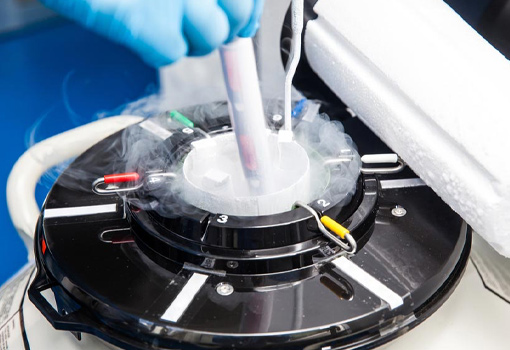
- Storage: Vitrified materials are stored in specialized containers immersed in liquid nitrogen, where they can remain for years without compromising quality.
The Importance of Vitrification in Modern Society
In today’s society, where many women choose to postpone motherhood for professional or personal reasons, vitrification stands out as a key technique. For oncology patients, it also represents a tangible hope for future parenthood despite medical challenges. The flexibility and effectiveness of vitrification make it an essential tool in addressing the fertility challenges of the modern world.
Future Outlook and the Impact of Vitrification
Vitrification is one of the most significant advances in ART, transforming conception possibilities and dramatically increasing success rates. As technology and research continue to evolve, this technique will remain a cornerstone of fertility care, offering new opportunities and hope to millions of individuals and couples around the world.
Designed by Freepik
Related Posts
Vitrification: A Major Breakthrough in Assisted Reproductive Technology
Assisted Reproductive Technology (ART) has become an essential solution for many couples...
The "Freeze-All Strategy": A New Frontier in Embryo Preservation
In recent years, reproductive medicine has made remarkable advances, introducing innovative...
The Effect of Center Variability on Assisted Reproduction: An In-Depth Analysis
Assisted reproduction represents a tangible hope for millions of couples around the world....
