


The "Freeze-All Strategy": A New Frontier in Embryo Preservation
In recent years, reproductive medicine has made remarkable advances, introducing innovative techniques that are revolutionizing the approach to assisted reproduction.
Among these, the "Freeze-All Strategy" is emerging as one of the most promising solutions, offering new opportunities to improve success rates and reduce the risks associated with IVF treatments.
What is the Freeze-All Strategy?
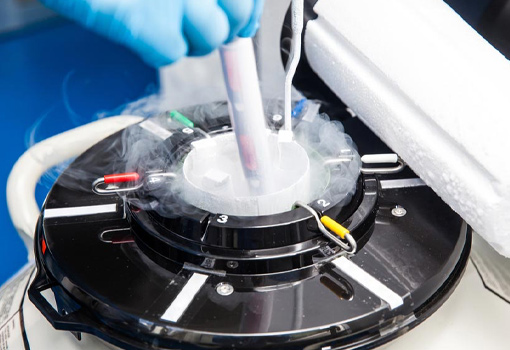
The "Freeze-All Strategy" involves freezing all embryos produced during an in vitro fertilization (IVF) cycle and postponing their transfer to a later cycle. This approach relies on vitrification, an ultra-rapid cryopreservation technique that prevents the formation of ice crystals, thus preserving the quality of the embryos.
Why adopt this strategy?
The Freeze-All Strategy offers numerous clinical and practical benefits, making it an increasingly popular choice among reproductive medicine specialists:
- Reduced risk of ovarian hyperstimulation syndrome (OHSS): By freezing embryos and delaying transfer, patients avoid undergoing embryo implantation during periods of high hormonal stimulation, thereby reducing complications.
- Endometrial optimization: After ovarian stimulation, the endometrium may not be in its ideal state for implantation. Delayed transfer in a natural or prepared cycle can improve implantation rates.
- Greater flexibility: This approach allows for more precise planning, reducing emotional stress for patients and workload for medical staff.
- Higher success rates: Recent studies have shown that frozen embryo transfers (FETs) can achieve pregnancy and live birth rates that are comparable to—or even higher than—those of fresh transfers.
Criticism and limitations of the Freeze-All Strategy
Despite its advantages, this strategy also has some limitations and criticisms:
- Additional costs: Vitrification and embryo storage come with extra expenses for patients.
- Longer waiting time: Delaying embryo transfer may require patience and emotional resilience.
- Not suitable for everyone: For women with diminished ovarian reserve or advanced maternal age, this approach may not be the most suitable option.
Future outlook
With continuous improvements in vitrification techniques and growing interest in personalized treatments, the Freeze-All Strategy is expected to become increasingly widespread. Moreover, integration with innovations such as preimplantation genetic testing (PGT) could further enhance its potential by enabling the transfer of the healthiest embryos.
A step forward in reproductive medicine
The Freeze-All Strategy represents a major advancement in fertility treatment, offering greater safety and improved outcomes for many couples. While further studies are needed to better define its ideal indications, this strategy is paving the way toward a more effective, safer, and personalized approach in reproductive medicine.
Related Posts

Vitrification: A Major Breakthrough in Assisted Reproductive Technology
Assisted Reproductive Technology (ART) has become an essential solution for many couples...
The "Freeze-All Strategy": A New Frontier in Embryo Preservation
In recent years, reproductive medicine has made remarkable advances, introducing innovative...
The Effect of Center Variability on Assisted Reproduction: An In-Depth Analysis
Assisted reproduction represents a tangible hope for millions of couples around the world....
